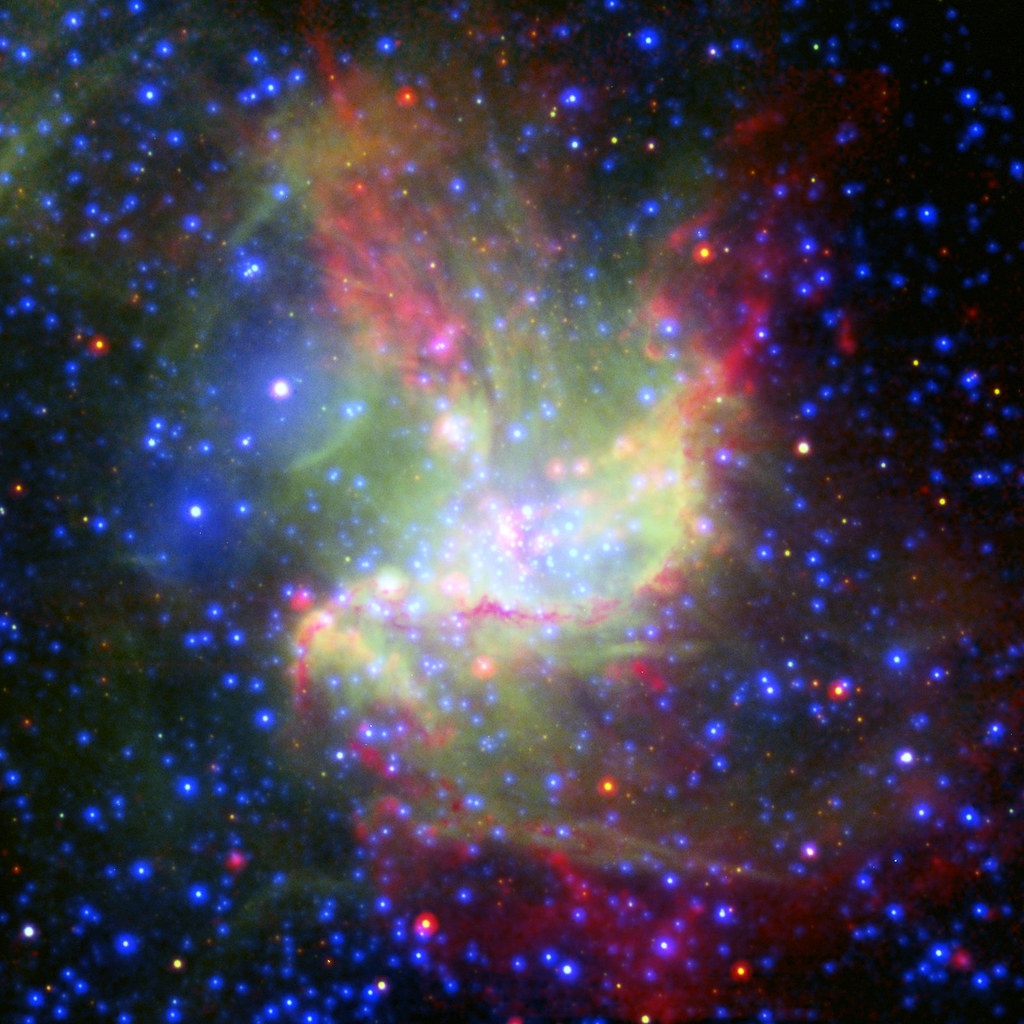
Scientists studying data from NASA’s Chandra X-ray Observatory have stumbled upon something the cosmos hadn’t shown us before: a new category of X-ray-emitting object that researchers are calling “hypersoft” beacons. Unlike the intense, high-energy X-ray bursts typically associated with black holes or neutron stars, these newly spotted sources give off remarkably weak, low-energy radiation, a signature so unusual that it doesn’t fit neatly into any existing classification of cosmic phenomena.
Chandra, one of NASA’s flagship space telescopes, has spent decades peering into the universe’s most energetic events, from colliding galaxies to the aftermath of supernova explosions. This latest finding suggests there may be entire populations of these faint objects that have gone undetected simply because their emissions are so much dimmer than what astronomers usually look for.
Researchers believe that studying these hypersoft sources further could help answer longstanding questions about the life cycles of stars, the behavior of matter under extreme conditions, and possibly even reveal new physics at play in far-flung corners of the galaxy. As with many astronomical discoveries, this one raises as many questions as it answers, and scientists are now racing to determine what, exactly, is producing this strange, gentle glow of X-rays.
For the full story and more details on this cosmic mystery, check out the original report from The New York Times.
Source: NASA Telescope Helps Scientists Find a New Type of X-ray Object (rss.nytimes.com).
Image: NASA Goddard Photo and Video, BY 2.0 (via Openverse).