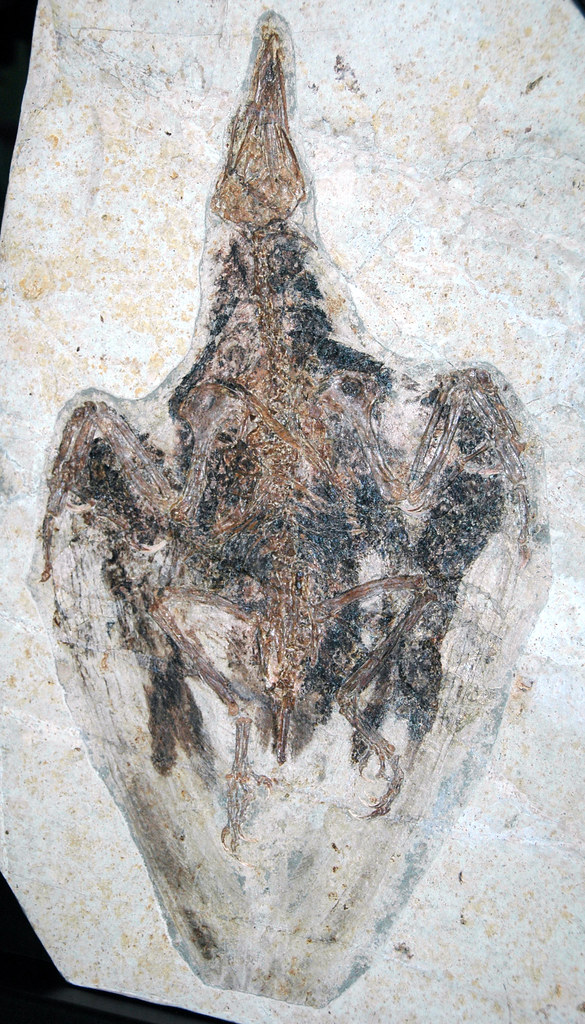
A tiny fossil is offering paleontologists a fresh window into one of evolution’s biggest survival stories. Researchers have identified a feather trapped inside a coprolite—fossilized excrement—that has kept its original three-dimensional shape instead of being crushed flat, as almost every other feather fossil embedded in rock has been over the millions of years since the age of dinosaurs.
That difference matters more than it might seem. Because the feather survived digestion and fossilization without losing its structure, scientists can examine details of its shape and construction that are usually lost to the flattening process. Those details could help explain how the ancestors of modern birds were built to endure the catastrophic asteroid impact roughly 66 million years ago that ended the reign of non-avian dinosaurs.
Feathers are already known to have existed on a wide range of dinosaurs, not just the lineage that led to birds, but figuring out which features gave early birds an evolutionary edge has been difficult using flattened specimens alone. A feather preserved in its natural form offers a rare, more complete look at that anatomy.
The find underscores how much scientists can learn from unglamorous corners of the fossil record, including preserved droppings, which often contain surprising organic remnants.
To learn more about this remarkable discovery and what it could mean for our understanding of bird evolution, read the full article at the source.
Source: A Feather Found in Dinosaur Poop Might Explain How Birds Beat Extinction (rss.nytimes.com).
Image: James St. John, BY 2.0 (via Openverse).