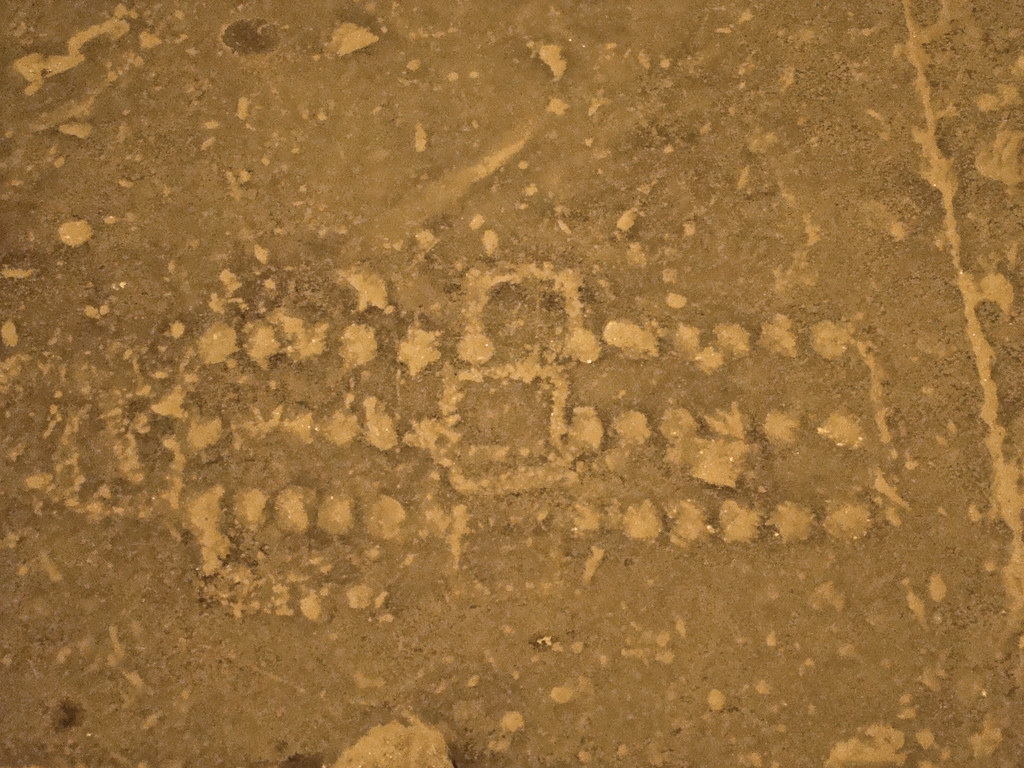
Board games were a popular pastime across the Roman Empire, but many of the rules that governed them were never written down—or if they were, those records haven’t survived to modern times. Now, a team of archaeologists says they’ve found a clever workaround: reading the wear patterns left behind by centuries of play.
The researchers examined a limestone slab believed to have served as a Roman gaming board, scanning it for microscopic imperfections and scuff marks. Over time, the repeated placement and movement of game pieces likely left subtle traces on the stone’s surface, invisible to the naked eye but detectable through high-resolution imaging.
To make sense of these faint clues, the team turned to artificial intelligence. By feeding the scanned data into computer models, they were able to identify patterns suggesting how pieces may have moved across the board, offering hints about the game’s likely structure and strategy.
While the exact rules of many ancient Roman games remain a mystery, this approach opens a promising new avenue for archaeologists: treating physical wear as a kind of hidden record, one that can be decoded with modern technology even when written instructions are lost to history.
Curious how the researchers pieced together this ancient puzzle? Read the full story at the source.
Source: Archaeologists Decode Rules of an Ancient Roman Board Game (rss.nytimes.com).
Image: isawnyu, BY 2.0 (via Openverse).