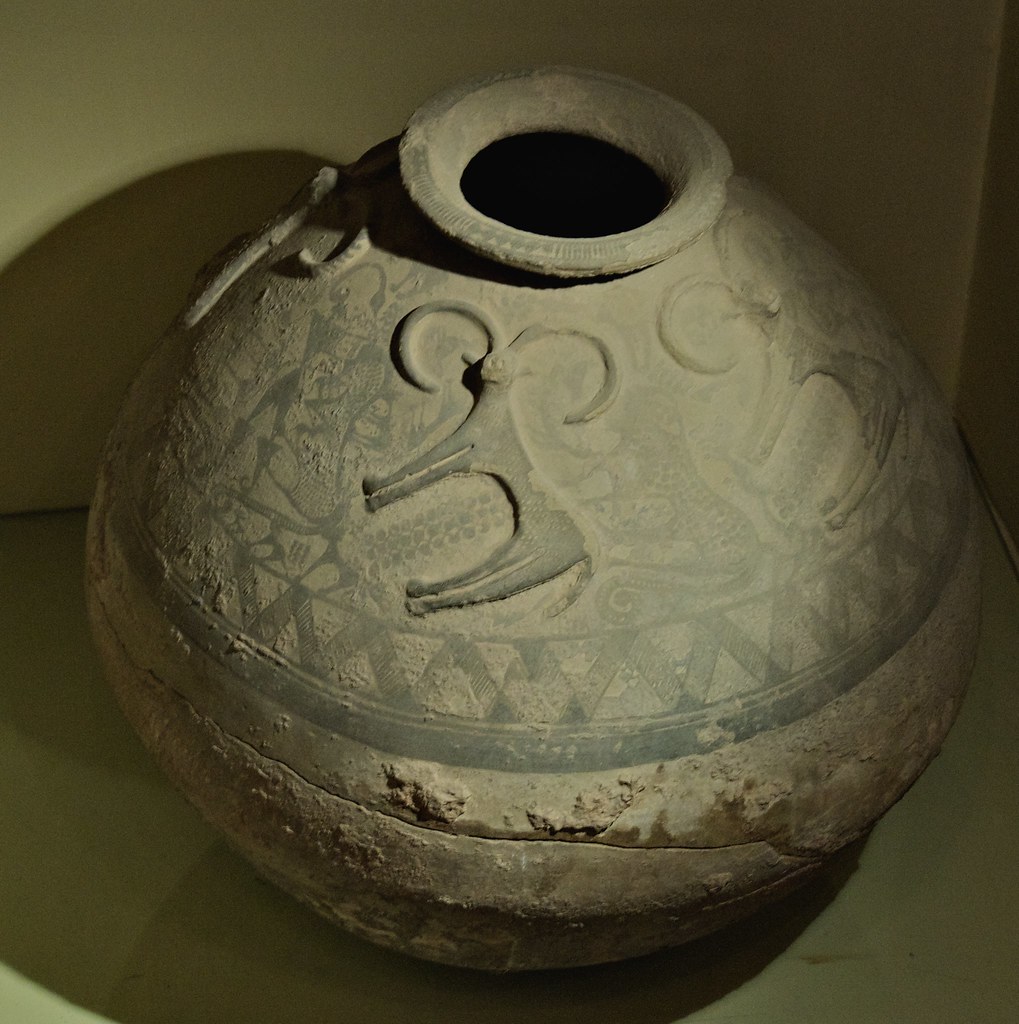
Long before written numerals existed, farmers in ancient Mesopotamia may have used decorated pottery as a practical bookkeeping tool, according to new research. The study focuses on the Halaf culture, an agricultural society that flourished roughly 8,000 years ago in what is now northern Syria and southeastern Turkey.
Halaf potters were known for painting their ceramics with intricate floral and geometric patterns. Scholars have long admired these designs for their artistry, but the new analysis suggests they may have carried a more functional purpose: helping communities keep track of goods such as grain, livestock, or textiles as trade networks expanded.
By comparing the repetition and variation of specific motifs across numerous vessels, the researchers argue that the patterns could have functioned like a proto-numerical code, allowing people to quickly identify quantities or categories of stored or traded items without a formal writing system. If accurate, this would push back the timeline for early human efforts to systematize counting, showing that visual symbols on everyday objects laid some of the groundwork for later mathematical and record-keeping practices in the region — well before the emergence of cuneiform writing in nearby Sumer.
The findings offer a fresh perspective on how prehistoric societies solved practical problems through art and design. To explore the archaeological evidence and expert analysis in full, read the original article at nytimes.com.
Source: How Ancient Farmers Used Floral Designs to Track Goods (rss.nytimes.com). English version produced with AI assistance.
Image: A.Davey, BY 2.0 (via Openverse).