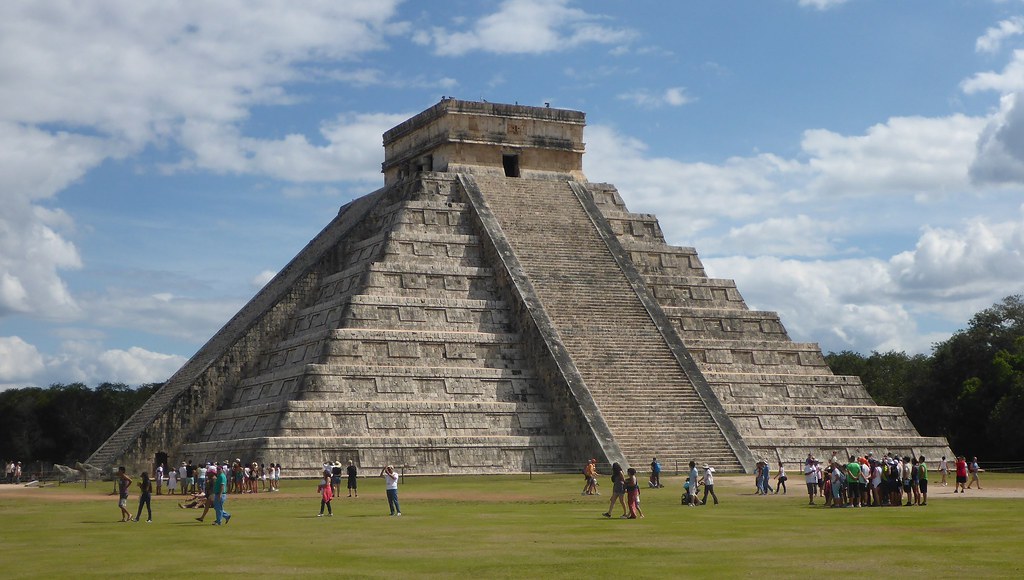
Workers and officials at Chichén Itzá, one of Mexico’s most visited archaeological sites, are getting ready for this year’s fall equinox, a date that draws thousands of visitors to the Yucatán Peninsula every September.
The main attraction is the pyramid known as El Castillo, dedicated to the Maya deity Kukulcán, the feathered serpent god. As the sun sets on the equinox, its light and shadow interact with the pyramid’s stepped edges in a way that creates the illusion of a serpent slowly descending the staircase toward a carved snake head at its base. The effect, tied to the precise astronomical alignment of the ancient structure, lasts only a few minutes but has fascinated visitors and researchers for decades.
Mexico’s National Institute of Anthropology and History, which oversees the UNESCO World Heritage site, typically coordinates crowd control, security, and viewing areas to accommodate the surge of tourists, along with descendants of the Maya and spiritual practitioners who consider the date sacred. Preparations often include cleaning ceremonial areas, setting up barricades to protect the stone structures, and organizing cultural events around the astronomical phenomenon.
The equinox, one of two days a year when day and night are roughly equal in length, has become both a scientific curiosity and a major tourism draw for the region. To read the full report on this year’s preparations, check out the original article from informador.mx.
 Source: Preparan Chichén Itzá para el equinoccio de otoño (informador.mx).
Image: Arch_Sam, BY 2.0 (via Openverse).