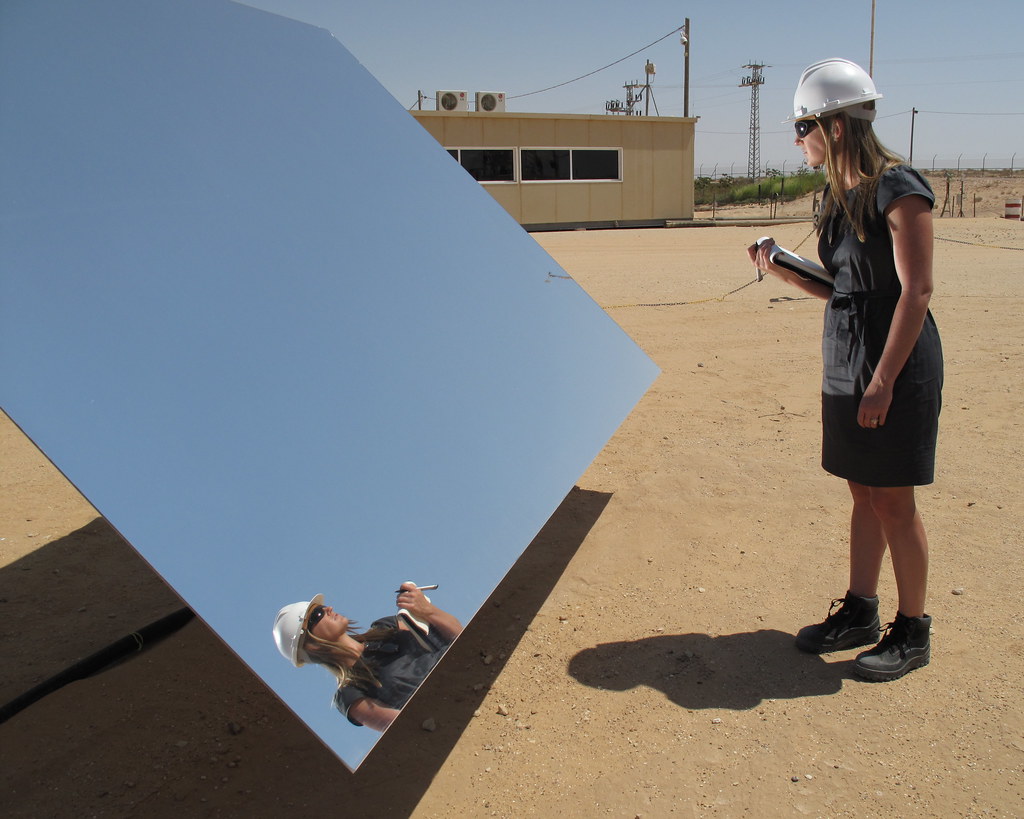
In the arid stretches of northwestern China, engineers have turned to an old idea with new ambition: capturing the sun’s heat, not just its light, to generate power around the clock. Near the city of Dunhuang, in Gansu province, a large-scale solar thermal plant uses thousands of mirrors to concentrate sunlight onto a central tower, heating molten salts to extreme temperatures.
That stored heat is the key innovation. Unlike conventional photovoltaic panels, which stop producing electricity the moment the sun goes down, molten-salt systems can release their stored thermal energy for hours afterward, turning turbines and feeding the grid well into the night. This makes the technology especially valuable for a country like China, which is racing to expand renewable energy while keeping its power supply steady and reliable.
Dunhuang itself is a historically significant desert oasis, once a key stop on the ancient Silk Road, and it now finds itself at the center of a very different kind of exchange: clean energy innovation. Chinese officials and energy planners are promoting the plant as a model for how solar power can be scaled up dramatically without sacrificing consistency, a persistent challenge for renewables worldwide.
For more details on the plant’s design and its role in China’s broader energy strategy, take a look at the original report.
 Source: Sistema de energía solar con sales fundidas revoluciona la generación de electricidad en China (jornada.com.mx).
Image: jurvetson, BY 2.0 (via Openverse).