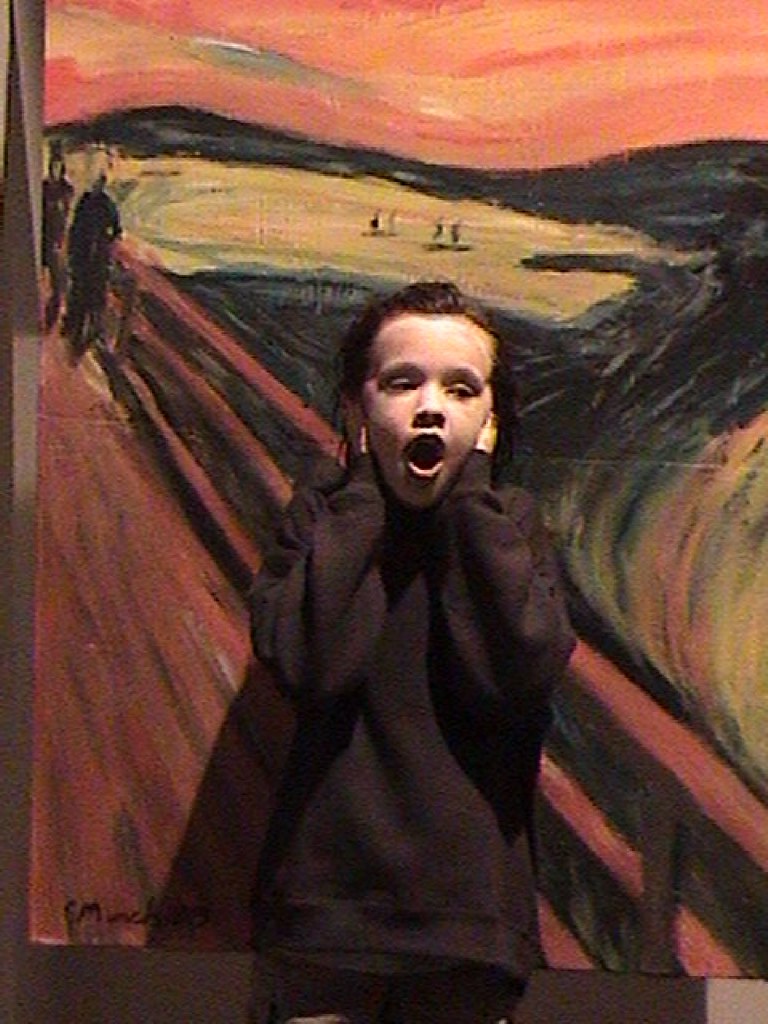
In a recent opinion piece for the Mexican newspaper El Universal, columnist José Carreño Carlón explores fear as a thread running through Western thought and culture, from 17th-century political philosophy to modern science fiction.
The essay’s title nods to Edvard Munch’s famous 1893 painting “The Scream,” using it as a jumping-off point to examine how fear has shaped human societies and our collective imagination. Carreño Carlón draws a line to Thomas Hobbes, the English philosopher whose landmark work “Leviathan” argued that fear of violent death is what drives people to accept a strong central authority in exchange for security and order—a foundational idea in modern political theory.
From there, the column leaps forward to “Blade Runner,” the dystopian film that imagines a future world where fear takes on new, technological dimensions, raising questions about power, control, and what it means to be human when survival itself feels uncertain.
By connecting a 19th-century painting, 17th-century philosophy, and 20th-century cinema, the piece suggests that fear remains a constant force behind how societies organize themselves and grant power to authority—whether that authority is a king, a state, or something more artificial and unsettling.
Curious to see how these ideas connect? You can read the full original column at El Universal.
Source: El ‘Grito’ del miedo: de Hobbes a Blade Runner (eluniversal.com.mx). English version produced with AI assistance.
Image: mrdorkesq, BY-SA 2.0 (via Openverse).