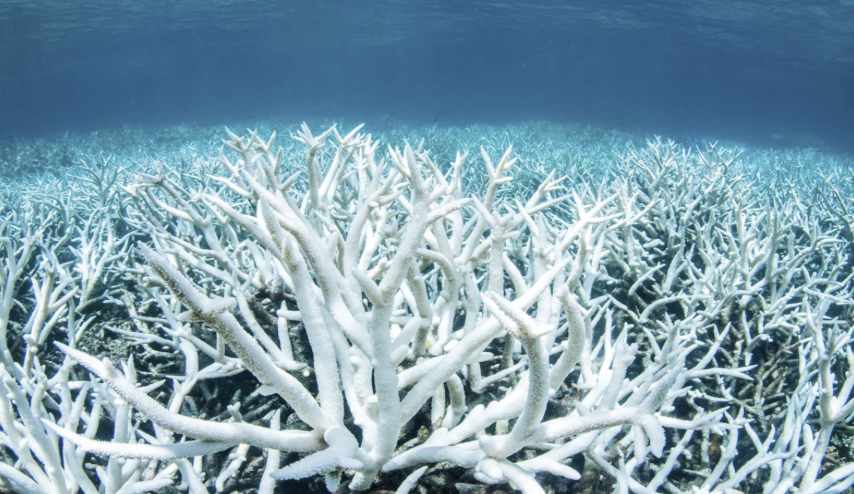
Coral reefs around the world have been suffering from bleaching, a stress response triggered by warming ocean waters that causes corals to expel the colorful algae living in their tissues, leaving them pale, weakened, and vulnerable to death. But a new study offers a surprising glimmer of hope: when researchers placed bleached corals in direct physical contact with healthy corals of the same genetic lineage, the sick corals bounced back at what scientists described as an “incredible” pace.
The findings suggest that something about that close contact, possibly the transfer of beneficial algae, microbes, or other biological signals, helps jump-start the recovery process in corals that would otherwise struggle to survive on their own. While the exact mechanism behind this healing effect is still being investigated, the discovery opens up intriguing possibilities for conservation efforts, particularly as reefs face increasingly frequent and severe bleaching events tied to climate change.
Coral reefs are often called the rainforests of the sea because they support roughly a quarter of all marine species despite covering less than 1 percent of the ocean floor. Their decline threatens not only marine biodiversity but also coastal communities that depend on reefs for fishing, tourism, and storm protection.
To learn more about how researchers made this discovery and what it could mean for reef restoration, read the full article at the link above.
Source: Bleached Coral Rebounded After Touching Healthy Coral, Study Finds (rss.nytimes.com).
Image: Danielle.ihde, CC0 1.0 (via Openverse).