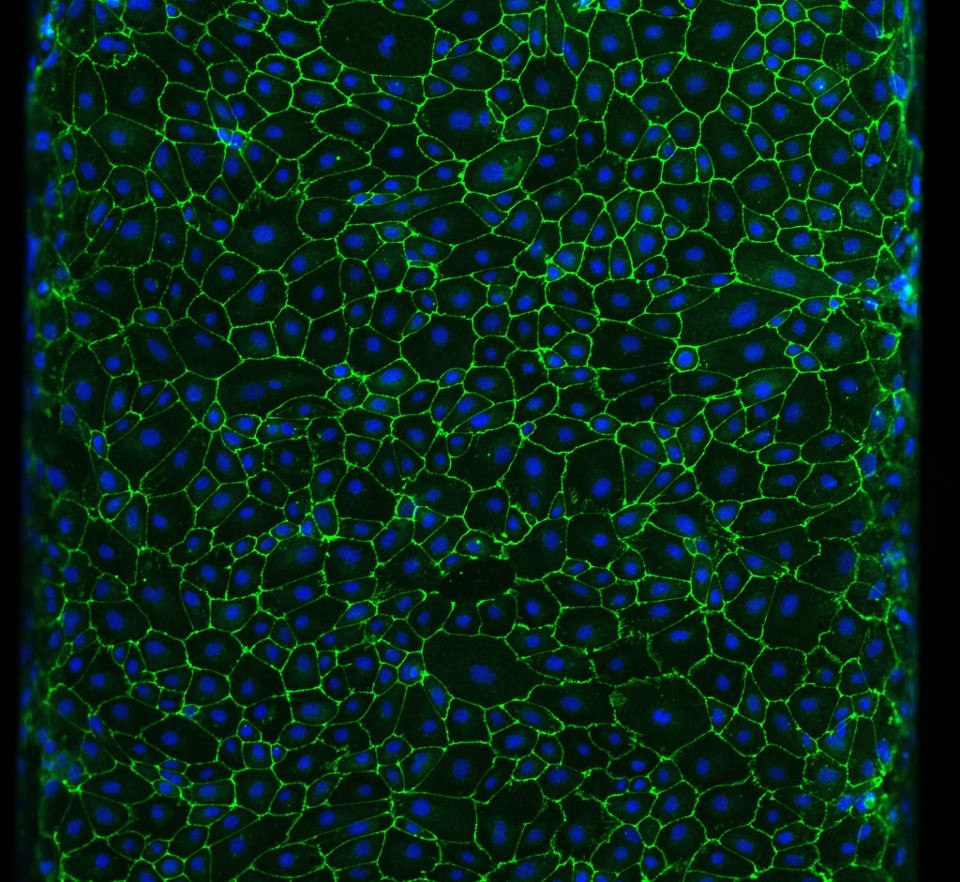
Researchers have successfully implanted human brain organoids—tiny, lab-grown clusters of neurons derived from stem cells—into the brains of living mice. Once transplanted, these human cells don’t just survive; they integrate with the mouse’s own neural circuitry, forming connections and even influencing the animal’s behavior in subtle ways.
Scientists say these hybrid mice could become powerful tools for studying human brain disorders that are notoriously hard to model in animals, including autism, schizophrenia and neurodegenerative diseases like Alzheimer’s. Because the human tissue develops inside a living, functioning brain rather than a petri dish, researchers can observe how real neural networks form and malfunction—potentially speeding up the search for new drugs and therapies.
But the achievement has also unsettled some in the scientific community. If human neurons can meaningfully alter an animal’s brain function, at what point does the animal’s cognition—or even its moral status—change? Bioethicists are now pushing for updated guidelines to govern this kind of research, arguing that current rules were written before this technology existed and don’t adequately address questions about consciousness, suffering or the blurred line between human and animal biology.
The debate highlights a familiar tension in cutting-edge science: extraordinary medical promise paired with uncharted ethical territory. To explore how researchers are grappling with these questions, read the full story at the link above.
Source: These Mice Have Partly Human Brains (rss.nytimes.com).
Image: NIH-NCATS, PDM 1.0 (via Openverse).