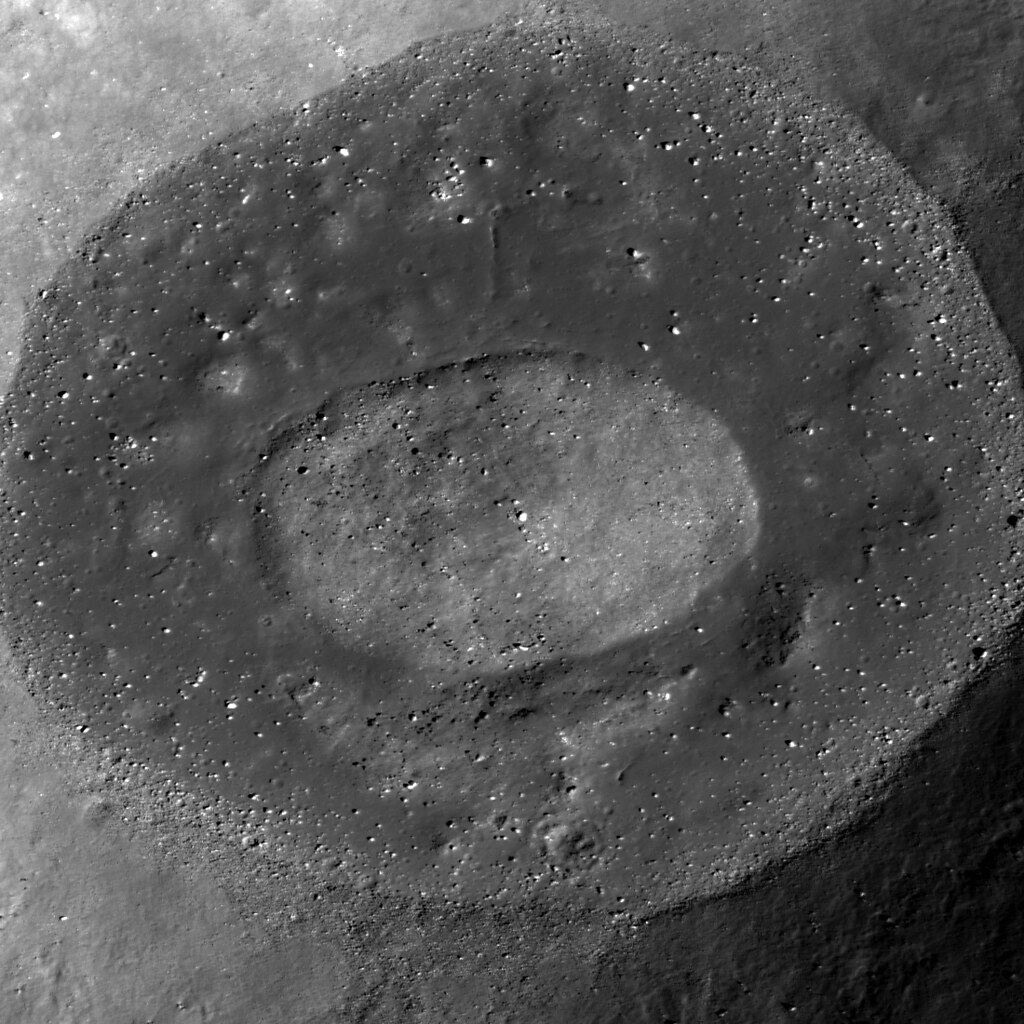
A newly discovered impact crater on the Moon is prompting scientists to reconsider the safety of future lunar outposts. The crater, measuring about 728 feet (roughly 222 meters) across, is large enough to swallow several football fields and appears to have formed relatively recently in geological terms.
Researchers say the finding underscores a risk that is often overlooked in plans to build permanent human bases on the Moon: unlike Earth, the lunar surface has no atmosphere to burn up incoming space rocks before they hit the ground. That means even modest-sized objects can carve out craters capable of threatening structures, equipment, or astronauts on the surface.
Space agencies and private companies, including NASA and other international partners, have been developing detailed plans for lunar habitats, particularly near the Moon’s south pole, where water ice deposits could support long-term missions. This newly identified crater serves as a fresh reminder that any such settlement will need to account for the possibility of sudden, unpredictable impacts.
Scientists are now studying the crater to better understand how often these events occur and what size threats future bases might realistically face. The discovery adds another layer of complexity to the engineering and site-selection decisions that will shape the next era of human presence on the Moon.
To learn more about this discovery and its implications, check out the original report.
Source: What a Massive New Crater Means for Future Moon Bases (rss.nytimes.com).
Image: NASA Goddard Photo and Video, BY 2.0 (via Openverse).