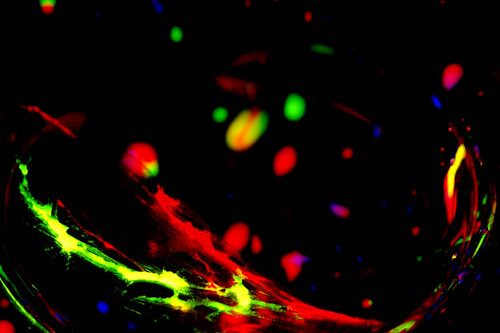
The Nobel Assembly in Stockholm, Sweden, announced on Monday that this year’s Nobel Prize in Physiology or Medicine will go to three researchers whose work transformed scientists’ ability to study the brain at the level of single nerve cells.
The winners are Karl Deisseroth, 54, Peter Hegemann, 71, and Georg Nagel, 73. Their research focuses on ion channels, the microscopic gateways in cell membranes that control the flow of charged particles in and out of nerve cells, and how these channels can be triggered by light. This discovery laid the groundwork for optogenetics, a technique that lets researchers turn specific neurons on or off with pulses of light, offering a level of precision that was previously impossible.
Optogenetics has since become an essential tool in neuroscience labs worldwide, helping researchers map how brain circuits control behavior, memory, and movement, and opening new paths for understanding disorders like Parkinson’s disease, depression, and blindness.
The Nobel Prize in Medicine is traditionally the first of the annual Nobel announcements, followed in the coming days by prizes in physics, chemistry, literature, peace, and economics. Each category carries significant prize money along with the global prestige of science’s most storied award.
For more details on the laureates and their groundbreaking research, check out the original article from Reforma.
 Source: Dan Nobel de Medicina a investigadores de actividad cerebral (Reforma).
Image: Daadi, BY-ND 2.0 (via Openverse).