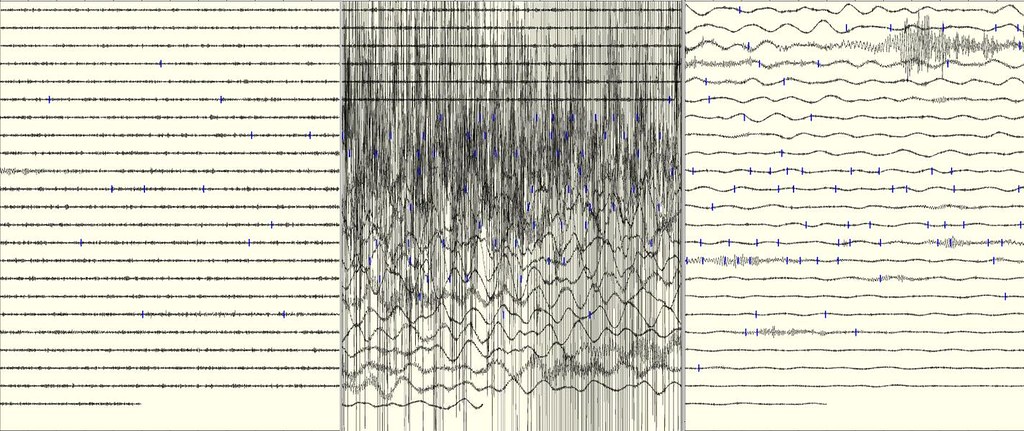
On August 10, a powerful earthquake measuring magnitude 7.4 struck western Colombia, centered near the town of San José del Palmar in the department of Chocó, at a depth of about 103 kilometers (64 miles). According to Colombia’s Geological Survey (SGC), the quake released energy roughly equivalent to 125 to 130 atomic bombs, one of the strongest tremors the country has recorded in recent years.
In the days following the main shock, researchers detected what scientists call a “seismic swarm”: an unusual cluster of numerous earthquakes occurring close together in time and location, without one single dominant aftershock. Unlike a typical earthquake sequence, where a large quake is followed by progressively weaker aftershocks, a swarm can include many tremors of similar size, sometimes persisting for days or weeks as underground stress continues to shift along nearby fault lines.
Colombian geologists are now studying the pattern to understand how the region’s fault system is behaving and whether the ongoing activity could raise the risk of another major tremor. Chocó, located along the Pacific coast, sits in a seismically active zone shaped by the collision of tectonic plates, making this kind of monitoring especially important for local safety planning.
For the full technical breakdown from Colombia’s Geological Survey, read the original report at El Tiempo.
Image: uair01, BY 2.0 (via Openverse).