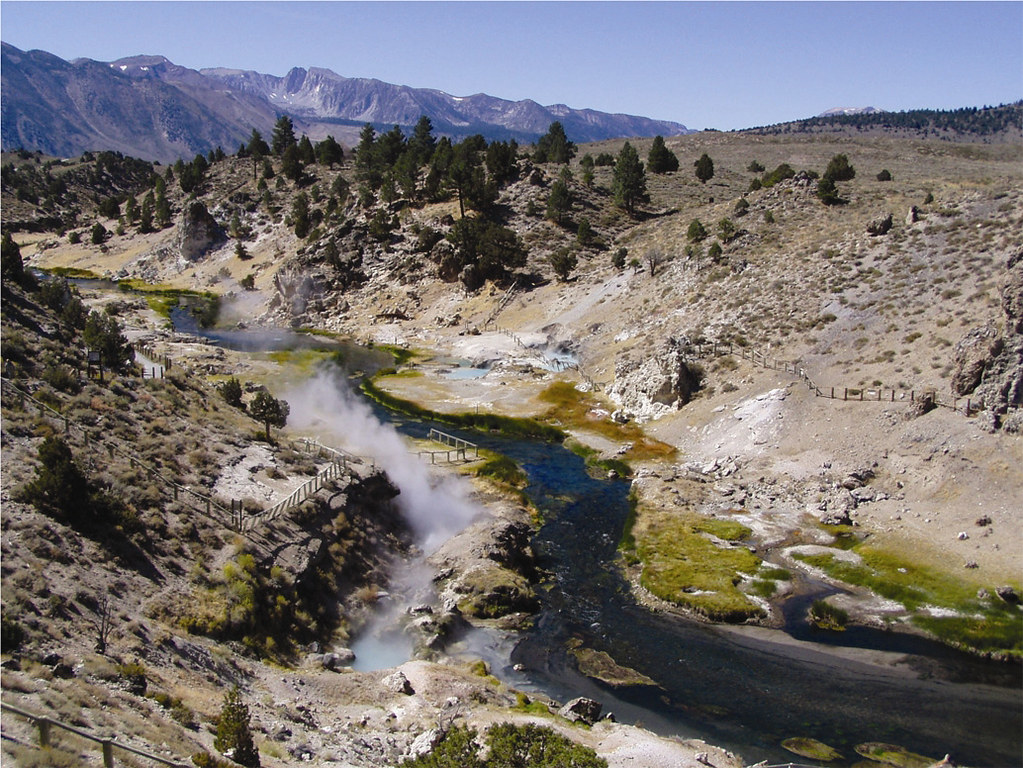
Deep in the volcanic streams of California, researchers have identified a microscopic organism that redefines the limits of life. The newly described amoeba can withstand water temperatures as high as 145 degrees Fahrenheit (about 63 degrees Celsius) — hot enough to scald human skin almost instantly, yet this single-celled creature thrives there.
What makes the discovery so striking is that the amoeba is a eukaryote, meaning its cells contain a nucleus and other complex internal structures, just like human cells. Until now, scientists believed that only simpler organisms, such as certain bacteria and archaea, could endure such extreme heat. Complex-celled life was thought to break down well before reaching these temperatures, since heat tends to unravel the proteins and membranes that keep advanced cells functioning.
The amoeba was found in geothermally heated streams fed by underground volcanic activity, environments scattered across parts of California where magma warms groundwater as it rises to the surface. These extreme habitats have long fascinated scientists studying “extremophiles,” organisms that flourish in conditions once thought uninhabitable, from boiling springs to acidic pools.
Researchers say understanding how this amoeba protects its delicate cellular machinery could offer clues about the outer boundaries of life on Earth — and perhaps even hints about what forms of life might survive on other, hotter worlds.
To learn more about how scientists made this discovery and what it could mean for the search for life beyond Earth, read the full original report.
Source: At 145 Degrees, This Amoeba Manages to Keep Its Cool (rss.nytimes.com).
Image: U.S. Geological Survey, CC0 1.0 (via Openverse).